
Starting your writing career means facing an early choice: self-publishing versus traditional publishing. This decision matters, because how you share your words can shape your audience, creative freedom, and even your wallet.
For aspiring authors, understanding the journey of self-publishing and traditional publishing means deciding if you want to release work on your own through a personal website, or submit it to established publishers who might put your book in stores.
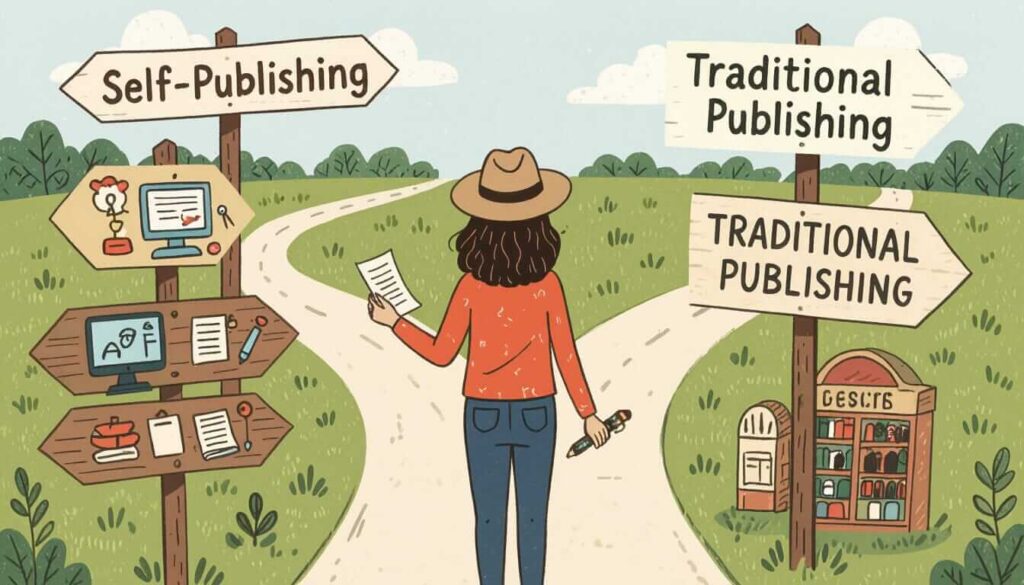
Self-publishing offers writers full control.
You choose your cover, set your price, and decide exactly what and when you publish. Bowker reported that 2.3 million self-published books were in circulation in 2021, showing this path is now mainstream.
Writers keep a larger share of sales, sometimes as much as 70% per sale on popular Canadian digital platforms like Kobo.
However, you do all the hard work yourself.
Editing, cover design, marketing, and even setting up web hosting for your book’s website all fall on your shoulders. Hosting means renting online space for your website’s files, much like renting a shelf in a bookstore, but online.
A personal author website acts as your digital home base.
It gathers your books, blogs, and news in one place. Through a well-designed site, you can collect email addresses, sell directly, and share behind-the-scenes content.
Maintaining your website also lets you adapt fast. You can post fresh excerpts, respond to trends, or change marketing strategies overnight. At Tresseo, we recommend using simple content management systems like WordPress so updates stay easy, even if you are more writer than techie. Think of a website as your digital storefront: the tidier and more interesting, the more likely readers will browse and buy.
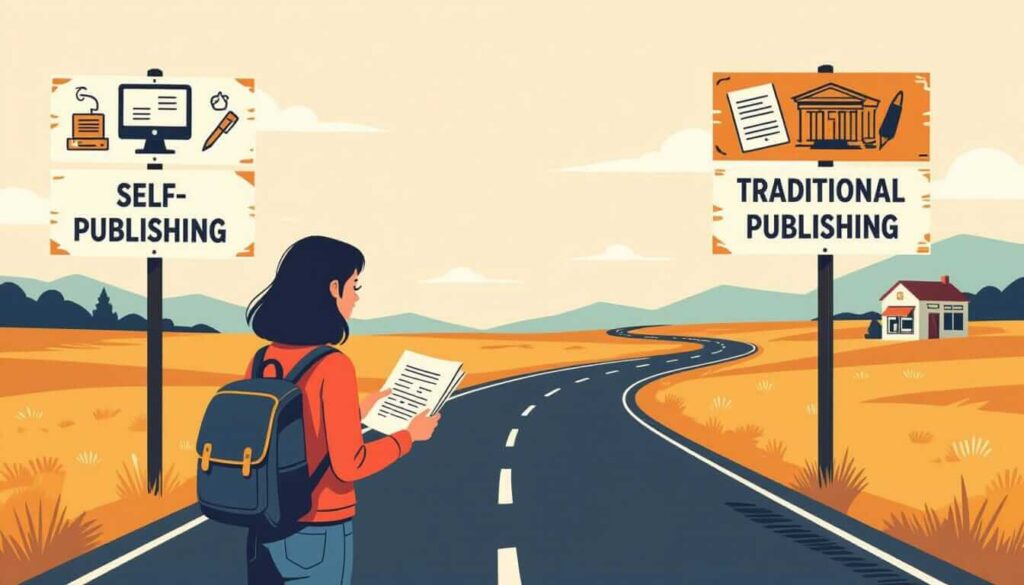
Traditional publishing brings a different set of strengths.
With this route, your book is handled by teams of editors, artists, and marketers. Their experience boosts your chance of getting into libraries, brick-and-mortar stores, and even media reviews. In 2020, traditional publishers accounted for nearly 60 per cent of the books available in Canadian bookstores.
These publishers handle web hosting for their sites and manage digital sales through established channels, so writers focus mainly on their craft.
Yet, getting accepted is tough. Publishers only accept about one in 1,000 unsolicited manuscripts. The process can stretch over years, from the initial pitch to publication. You may need an agent just to get noticed, and you give up some creative choices on titles and covers.
Traditional publishing can build your reputation and connect you with new readers.
Their distribution networks place books on real and virtual shelves. Often, though, debut authors receive smaller advances, and royalties can be just 10 to 15 per cent per sale. Plus, you must share control. Sometimes your story changes to better fit a publisher’s vision.
Writers who want the best of both worlds sometimes use a “hybrid” model. They self-publish some titles and pursue publisher deals for others. This approach allows you to manage a website of independent works while still pursuing traditional exposure.
– Self-publishing gives control and higher direct income.
– Traditional publishing supports editing and wide distribution.
– Building a website boosts credibility for all writers.
– Hybrid models combine the strengths of both paths.
– Prepare for technical tasks if choosing self-publishing.
In addition, building a small web presence, even when pursuing traditional publishing, helps agents and publishers see your audience engagement. Posting sample chapters, maintaining a professional author bio, and responding to reader reviews make your pitch to publishers stand out.
Self-publishing and traditional publishing both offer unique routes for writers. Choosing to publish on your website lets you keep control and connect directly with readers, but requires work and technical understanding. Traditional publishing delivers professional support and bigger distribution, yet making it through the gates is demanding.
No matter your choice, combining strong writing with a smart author website creates new opportunities for your stories to shine.



Copyright © 2022 - 2026. Tresseo. All rights reserved.